Credit: The second book my friend Ashok gifted me during my Nepal trip is already piquing my curiosity. Ashok has impeccable taste in books, so I couldn't wait to see what hidden gem he's introduced me to this time!
Showing posts with label Book Review. Show all posts
Showing posts with label Book Review. Show all posts
July 20, 2024
A Grand Journey Through Time: A Review of Sapiens by Yuval Noah Harari
June 17, 2024
Thinking, Fast and Slow by Daniel Kahneman: A Deep Dive with a Touch of Eastern Wisdom
A heartfelt thank you to my friend Ashok for gifting this thought-provoking book, "Thinking, Fast and Slow" by Daniel Kahneman, to my daughters. The timing couldn't have been more perfect. Fresh off a pilgrimage trip to Nepal, where I was deeply immersed in the richness of Hindu philosophy, I dove into this exploration of our two thinking systems with a newfound perspective.
May 23, 2024
Jonathan Livingston Seagull: A Timeless Tale of Soaring High

“‘The only true law is that which leads to freedom,’ Jonathan said. ‘There is no other.’”
Remember those childhood reads that felt like more than just stories? Books that sparked your imagination and left a lasting impression? This was the book my father encouraged me to read during childhood. According to my father, this book can be read from any page and still serves the purpose. For me, Jonathan Livingston Seagull by Richard Bach was one such book. Revisited recently, it offered a surprising depth that resonated even stronger than in my younger years.
May 18, 2024
The Development Dance: A Humanitarian Aid Worker's Perspective
As a humanitarian aid worker, I'm constantly seeking out resources to understand the bigger picture of development. That's why Haley J. Swedlund's "The Development Dance" caught my eye at the New Delhi airport. The book offered a refreshing perspective on the challenges that often cause well-meaning foreign aid projects to falter.

Swedlund dives into the concept of "aid churn," the constant shift in funding mechanisms from project-based to budget support to cash transfers. This resonates deeply with my experiences in Ethiopia, Afghanistan, Syria and South Sudan. For instance, a recent water well project funded through a humanitarian grant prioritized speed over long-term sustainability. The chosen location wasn't ideal for the aquifer, and the community lacked the maintenance skills necessary to keep the well functional long-term. This aligns perfectly with Swedlund's analysis of how donor priorities can clash with actual community needs, leading to wasted resources.
Swedlund dives into the concept of "aid churn," the constant shift in funding mechanisms from project-based to budget support to cash transfers. This resonates deeply with my experiences in Ethiopia, Afghanistan, Syria and South Sudan. For instance, a recent water well project funded through a humanitarian grant prioritized speed over long-term sustainability. The chosen location wasn't ideal for the aquifer, and the community lacked the maintenance skills necessary to keep the well functional long-term. This aligns perfectly with Swedlund's analysis of how donor priorities can clash with actual community needs, leading to wasted resources.
May 05, 2024
A Review of "The Covenant of Water" by Abraham Verghese

The book delivered on that promise in spades. Verghese's prose is nothing short of masterful. He paints a vivid picture of life in Kerala, a land where water is both a life-giver and a constant threat. From the tranquil canals to the raging monsoons, the ever-present water becomes a character itself, mirroring the moods and fortunes of the multi-generational family at the center of the story.
The story follows the struggles and triumphs of this family across the 20th century, expertly weaving in real-world events like India's independence struggle and the evolution of healthcare. This historical context adds depth and allows Verghese to explore the impact of broader social transformations on individual lives.
May 04, 2024
Gambling on Development: A Humanitarian's Perspective with Reservations
Stefan Dercon's "Gambling on Development" offers a thought-provoking exploration of development, particularly the concept of "development bargains" struck by elites. As a humanitarian aid worker, I found the book valuable in highlighting the importance of long-term growth strategies and effective state function. However, my experience working in some of the world's most challenging environments compels me to offer some additional perspectives.

The Power of a Bargain, The Plight of the Bystanders
Dercon's examples of successful development, like Ethiopia's infrastructure improvements, resonate with my own observations. When a "development bargain" leads to stability and investment, it creates a ripple effect. Farmers have better access to markets, healthcare reaches more communities, and overall well-being improves. This is where well-directed aid can truly amplify these positive changes.
However, the book's focus on national politics often overlooks the human cost of these bargains. The "people on the ground" – the very ones development aims to uplift – are largely absent. I've seen countless communities bypassed by these top-down agreements, their needs and voices unheard. Dercon could have explored how these bargains can be made more inclusive, ensuring benefits reach the most marginalized.
April 14, 2024
A Review of "It's What I Do" by Lynsey Addario
Lynsey Addario is an American, Photo-Journalist and Author. She photographed for Time Magazine, The New York Times, and National Geographic.
 Lynsey Addario's memoir, "It's What I Do," is not simply a war photographer's chronicle; it's a raw and necessary exploration of the human cost of conflict, especially for women. As an aid worker who has traversed war zones from Afghanistan to Sri Lanka, Addario's unflinching portrayal resonated deeply with my own experiences.

The book opens with a powerful image – a young Afghan woman forced to wear a burqa under Taliban rule. This single image speaks volumes, capturing the crushing loss of freedom for women under such oppressive regimes. Addario's strength lies in going beyond mere documentation. She infuses her work with a personal touch, allowing the reader to connect with the human stories behind the conflict.
February 25, 2024
A Grueling But Necessary Look: Book Review of Falling Night

Alan Swales, the protagonist, is a bit of an everyman. He's bored, unfulfilled, and seeks adventure in aid work. His journey is a cautionary tale for anyone with romanticized notions of the job. This is a world of violence, corruption, and moral ambiguity, a far cry from the brochure photos.
The book shines in its portrayal of the complexities of aid work. Clarke exposes the murky underbelly of some NGOs, where self-interest can overshadow the needs of the people we're supposed to be helping. It's a truth some might find uncomfortable, but it's a conversation we need to have.
February 14, 2024
The Uncomfortable Truth: A Review of "The Humanitarian Exit Dilemma"

"The Humanitarian Exit Dilemma" by Chin Ruamps dives headfirst into a question that haunts many of us in the field: what happens when good intentions go bad? Ruamps dissects the "Humanitarian Exit Dilemma" – the agonizing decision of whether to stay put and offer aid or withdraw and potentially leave people worse off.
The book challenges the traditional focus on outcomes, the number of people having access to safe water, fed or vaccinated. Ruamps argues that this narrow view misses the ethical complexities. Her concept of a "Non-Consequentialist Approach" resonates with my own experience. In many challenging contexts (e.g. recently in Gaza) we talk about the "No regret approach". Saving lives is paramount, but so is building trust, honouring our commitments, and avoiding actions that unintentionally worsen the situation.
January 10, 2024
Patan Ni Prabhutva: A Captivating Glimpse into Gujarati Literature's Rich Tapestry

At the heart of the story lies Queen Minaldevi, a character of ambition and cunning. Determined to secure her son's succession to the throne, she navigates a treacherous path amidst scheming warlords and power-hungry merchants. Her journey intersects with the astute Chief Minister, Munjal Mehta, a pillar of unwavering loyalty and strategic brilliance for the kingdom.
October 20, 2023
Book Review: Tall Man Small Shadow by Vipin Behari Goyal

As an international development worker from India, my faith is a cornerstone of my life. So, when I pick up a book, I naturally look for stories that explore the deeper questions of existence. Tall Man Small Shadow by Vipin Behari Goyal does just that, weaving a captivating narrative around the lives of several interconnected characters. This book holds a special place in my heart, as the author, Mr. Vipin Behari Goyal, is my uncle.
A Story Told from Many Angles
The book's strength lies in its multi-perspective narration. We see the story unfold through the eyes of Anupam, a man constantly seeking the meaning of life, his wife Sulekha, a master manipulator who orchestrates events with a subtle hand, and their daughter Aalya, grappling with love and relationships. Each character brings a unique voice and perspective, enriching the story and making the reader connect with different aspects of the human experience.
August 17, 2023
Delving Deeper into The Shadow Lines: A Postcolonial Masterpiece

Being an avid reader of postcolonial literature, I'm constantly drawn to works that explore the complexities arising from the dismantling of colonial empires. Amitav Ghosh's The Shadow Lines perfectly encapsulates this genre, weaving a narrative rich in historical detail and simmering with the friction that arises when artificial borders are carved upon a nation's soul. Ghosh, an Indian author whose cosmopolitan upbringing informs his writing, transcends simplistic narratives to deliver a powerful story that resonates on a deeply human level.
Beyond Witnessing, Experiencing:
Beyond Witnessing, Experiencing:
March 27, 2023
Book review : The Vulnerable Humanitarian: Ending Burnout Culture in the Aid Sector by Dr. Gemma Houldey
Humanitarian aid workers are some of the most dedicated and compassionate people on the planet. They devote their lives to alleviating suffering and helping those in need. However, the very nature of their work exposes them to a constant barrage of trauma, leading to a high risk of developing mental health problems.
The mental toll of this work is just as profound, if not more so. As a humanitarian aid worker, I've seen firsthand the toll this work can take. I've seen colleagues, beacons of hope one day, suddenly withdraw, their spirits dimmed by the weight of what they've seen.
 Gemma Houldey's "The Vulnerable Humanitarian" is a breath of fresh air, finally giving voice to the struggles we often face in silence.
The mental toll of this work is just as profound, if not more so. As a humanitarian aid worker, I've seen firsthand the toll this work can take. I've seen colleagues, beacons of hope one day, suddenly withdraw, their spirits dimmed by the weight of what they've seen.

August 20, 2021
A Lifesaver for Weary Souls: A Review by a Humanitarian Aid Worker

Pigni's book isn't some theoretical treatise. It's a flashlight cutting through the fog of burnout, revealing the complex interplay between our personalities (mine leans heavily on the "perfectionist do-gooder" side) and the often-broken systems we navigate. We're not just succumbing to long hours; it's the idealism clashing with the harsh realities of funding shortages, bureaucratic nightmares, and the feeling that no matter how hard we push, the needs always seem to outpace the resources.
The beauty of the book lies in its structure. Bite-sized chapters, like daily rations for the soul, tackle different aspects of self-care. "We are not our work," Pigni reminds us – a simple sentence that carries immense weight as I fight to maintain a personal life amidst the chaos. It's a book I don't read cover-to-cover but revisit in stolen moments. Each chapter, is a touchstone, reminding me to set boundaries, nurture relationships outside of the "aid bubble," and most importantly, prioritize my own well-being.
But Pigni doesn't stop at individual self-care. She throws down a gauntlet to the entire humanitarian sector. We can't keep relying on the boundless energy of idealistic newcomers. We need a culture shift, one that values mental health support and creates work environments that are realistic and sustainable. The guilt I often feel for taking a break for fear of letting the team down? Pigni reframes it, reminding me that a burned-out aid worker is no use to anyone.
The news of Pigni's passing hit me hard. It felt like losing a mentor, someone who understood the specific challenges we face. But her legacy lives on in these pages. "The Idealist's Survival Kit" isn't a magic bullet, but it's a powerful tool in my self-preservation arsenal. It's a reminder that amidst the suffering, we can't pour from an empty cup.
This book is a must-read for everyone in the humanitarian sector. For newbies, it's a guide to navigate the emotional rollercoaster ahead. For veterans like myself, it's a validation of our struggles and a call to action. We need to prioritize mental well-being, not just for ourselves, but to build a future where idealism and self-care go hand-in-hand. After all, how can we effectively fight for the well-being of others if we're neglecting our own?
April 20, 2021
A Humanitarian's Perspective on "Development as Freedom" by Amartya Sen

The book highlights the various "unfreedoms" that people face – poverty, lack of education, political oppression – and how these diminish their ability to live fulfilling lives. This resonates deeply with the struggles I witness daily – people trapped in cycles of poverty, unable to access basic healthcare or education.
Sen emphasizes the importance of individual agency. People aren't just passive recipients of aid; they are active agents in their own development. This aligns with my growing belief in empowering local communities and fostering self-sufficiency.
The book's strength lies in its focus on practicalities. Sen explores the interconnections between economic, social, and political freedoms. He examines the roles of markets, governments, and civil society in promoting these freedoms. This knowledge is crucial for aid workers who need to understand the complex dynamics within the communities they serve.
While some might criticize Sen for not addressing the deep structural inequalities perpetuated by powerful institutions like the IMF, his core message remains vital. Development isn't just about building roads and bridges; it's about creating an environment where people have the freedom to flourish.
Here's how Sen's ideas can be applied in the field:
- Shifting Focus: Move away from a purely needs-based approach and consider how interventions can empower people and expand their freedoms.
- Prioritizing Education: Education is a key driver of individual agency and social progress. Aid programs should prioritize supporting access to quality education.
- Promoting Participation: Local communities should be involved in designing and implementing aid projects to ensure they address their specific needs and freedoms.
- Holding Power to Account: Sen emphasizes the importance of transparency and accountability. Aid workers can play a role in advocating for good governance and upholding human rights.
Here are some concrete examples of how Sen's ideas are being applied today:
- Microfinance programs: These programs provide small loans to individuals, often women, to start businesses. This empowers them economically and broadens their choices.
- Community-based education initiatives: These programs involve local communities in designing and delivering education programs that address their specific needs and empower individuals.
- Participatory budgeting: This approach allows citizens to have a say in how public resources are allocated. This fosters transparency and empowers communities to invest in their own development.
June 11, 2018
Zen and the Art of Motorcycle Maintenance: A Motorcycle Pilgrimage

My dad recommended me this book years ago. He said, with a hint of a smile, "It's about taking care of what matters, not just your wheels, but your whole self too." Intrigued, I dove in. I remember it took over a year to complete reading the book. Back then, in my early 20s, a few of my professors and elders in my family mentioned this book too, comparing it to a modern-day Bhagavad Gita – a guide for navigating life's twists and turns.
May 05, 2016
A Classic Entangled: A Review of Saraswatichandra

As an Indian history enthusiast, Govardhanram Madhavaram Tripathi's Saraswatichandra captivated me by transporting me to the heart of 19th-century India. The novel unfolds like a grand historical tapestry, weaving a tale of love, loss, and the societal constraints that shaped lives.
Love and Betrayal in a Bygone Era
The narrative revolves around Saraswatichandra, a young scholar, and Kumud, a woman of remarkable intellect and beauty. Their arranged marriage blossoms into love through heartfelt letters, a fascinating glimpse into pre-modern courtship. However, fate intervenes, mirroring the uncertainties of that era. Saraswatichandra is forced to flee his affluent home due to a family conflict, leaving behind a heartbroken Kumud.
A Labyrinth of Societal Pressures
The story takes a poignant turn when Kumud is married off to Pramad, a reflection of the prevalent social norms that often prioritized duty over personal choice. The plot thickens when Saraswatichandra, disguised under a new identity, finds himself working within the same household as Kumud. This creates a captivating yet uneasy situation, highlighting the stifling nature of societal expectations.
Unfulfilled Potential and Questions Raised
While the narrative explores the enduring power of love, Saraswatichandra's character, initially strong-willed, succumbs to societal pressures. His eventual marriage to Kumud's sister, Kusum, raises questions about the weight of tradition on individual happiness. This ending, though thought-provoking, leaves a sense of unfulfilled potential, particularly for those who yearn for a rebellion against restrictive norms.
A Legacy of Complexity
Despite its flaws, Saraswatichandra remains a significant work. The novel's historical context provides a window into a bygone era, showcasing the societal structures and pressures that shaped lives. The epic scale of the narrative and the complex characters offer a captivating exploration of love, loss, and the human condition.
A Must-Read for History Buffs Seeking a Challenge
For those who enjoy historical fiction that challenges conventions and explores the complexities of human relationships, Saraswatichandra is a compelling read. It invites the reader to question societal norms and ponder the enduring power of love, even in the face of immense constraints. So, delve into this classic and decide for yourself: is it a happily ever after, or a poignant reflection of societal limitations?
September 15, 2013
An Uncertain Glory: Shining a Light on India's Contradictions

Jean Dreze and Amartya Sen, two of India's most renowned economists, paint a complex portrait of their home country in An Uncertain Glory: India and its Contradictions. They challenge the image of India as a booming consumer giant, arguing instead for a focus on the vast number of people living in poverty.
Beyond the Boom: A Look at Social Realities
The book doesn't deny India's economic growth but emphasizes that this growth hasn't translated into better lives for the majority. Dreze and Sen use statistics to show India lagging behind its South Asian neighbours in crucial areas like literacy, child health, and sanitation.
Education in Crisis, Healthcare in Neglect
The authors delve into specific concerns. A chapter on education exposes the harsh reality of primary schools where students struggle with basic skills. Another chapter criticizes the inadequate healthcare system, highlighting India's low childhood immunization rates, a problem even more concerning than the challenges faced by Pakistan.
Culture or Choice? Blaming the Victim vs. Seeking Solutions
Dreze and Sen reject arguments that blame India's problems on cultural factors or democratic limitations. They point to neighbouring countries like Bangladesh and Sri Lanka, which have made significant progress in social indicators despite similar challenges.
The Power of Public Discourse: Breaking the Silence
The book argues that the vast majority of India's poor are effectively silenced in public discourse. Dreze and Sen criticize the media's obsession with celebrities and political squabbles, arguing that this trivializes important issues concerning the well-being of millions.
A Call to Reimagine Progress
An Uncertain Glory goes beyond critique. It's a passionate plea for a new definition of progress in India. The authors urge the nation to prioritize the well-being of its most vulnerable citizens, focusing on investment in education, healthcare, and basic necessities.
A Book that Stirs the Conscience
This is more than just an economic analysis; it's a wake-up call. Dreze and Sen challenge readers to confront the uncomfortable realities of India's development and advocate for a future that prioritizes human well-being over empty consumerism.
May 20, 2013
Arundhati Roy's "The God of Small Things"

Arundhati Roy's Booker Prize-winning novel, "The God of Small Things," offers a glimpse into the complexities of life in Kerala, India.
As an international aid worker, many of us have encountered the social issues Roy explores in her book: caste systems, social inequalities, and the lingering effects of colonialism. This novel sheds light on these issues through the story of fraternal twins, Rahel and Estha, navigating a childhood marked by loss and societal constraints.
The Story
The narrative unfolds through a non-linear timeline, gradually revealing the events leading to a tragedy that forever alters the twins' lives. Roy masterfully weaves in themes of love, family, and the enduring impact of seemingly insignificant moments.
Beyond the Narrative
Roy's evocative descriptions bring Kerala to life, painting a vivid picture of the landscape and its inhabitants. The novel delves into the social and political climate of 1960s and 70s India, including the influence of communism and religious tensions.
A Word of Caution
The book contains graphic descriptions of violence and sexual abuse, so be prepared for some challenging content.
Why This Book Matters
"The God of Small Things" is a powerful and moving story that offers a deeper understanding of Indian culture and the social issues that continue to affect people's lives. This is a valuable read for anyone interested in gaining a broader perspective on the world, particularly those working in international aid.
Recommendation
While the beginning might feel slow, Roy's exceptional writing style and the richness of the story make this a rewarding read. If you persevere through the initial chapters, you'll be captivated by the characters and the world Roy creates.
August 22, 2012
A Critical Look at "Games Indians Play"
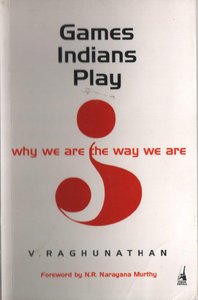
V. Raghunathan's "Games Indians Play" takes an intriguing approach to understanding Indian behaviour. The book utilizes game theory and behavioural economics to analyze cultural patterns often referred to as the "Indian way." Raghunathan, a professor at IIM Ahmedabad and an expert in these fields, identifies twelve "canons of Indianness." These include characteristics like low trustworthiness, a public facade of simplicity masking private shrewdness, and a fatalistic outlook.
While the book offers a thought-provoking framework, it also draws criticism for its focus on negativity. Raghunathan dissects aspects like lack of public hygiene, weak self-regulation, and a propensity to exploit loopholes. This relentless focus on negatives paints a rather bleak picture, neglecting the positive aspects of Indian society.
Here's a deeper look at the key points of critique:
- An Incomplete Picture: Raghunathan's analysis, while insightful, lacks a holistic approach. Focusing solely on negatives ignores the rich tapestry of Indian culture, its strong family values, its vibrant artistic traditions, and its renowned hospitality.
- Overgeneralization: Applying a single set of characteristics to such a diverse population with vast regional and cultural variations is inaccurate. Generalizations about "Indians" can be misleading, as behaviours and values differ greatly across the subcontinent.
- Limited Usefulness of Game Theory: While game theory sheds light on how social interactions unfold, it doesn't necessarily offer solutions for improvement. The book highlights problems but stops short of proposing concrete steps towards positive change.
- Author's Frustration: The relentless focus on negatives can be interpreted as the author's frustration with societal shortcomings. This might color the overall analysis and leave the reader feeling discouraged.
- Rehashing Known Issues: The book might be seen as simply compiling a list of well-known problems without offering fresh perspectives or insights.
Questions for the Author:
- Motivation: What was the author's primary objective in highlighting these negative aspects? Was it to spark discussion on potential solutions or simply to present a critical analysis?
- Solutions and a Path Forward: Does the book propose any solutions or pathways for addressing the identified issues? How can these "games" be played differently to achieve a more positive outcome for Indian society?
- Impact on Teaching: Given the book's focus on negatives, how does the author handle this approach when teaching future leaders at IIM Ahmedabad?
Overall, "Games Indians Play" offers a thought-provoking framework for understanding Indian behaviour. However, its focus on negatives without a corresponding exploration of positive aspects and solutions leaves the reader with a somewhat incomplete picture. The book might be more effective if it offered a more balanced perspective and explored pathways for positive change.
Personally, I did not enjoy reading this and I would say it’s a product of a frustrated and highly educated person. As my friend Aby Abraham says sometimes – one thing you cannot do about India is generalization.
Subscribe to:
Posts (Atom)